Balatro Wasn't Poker: Everyone Read It Wrong
Put this on while you read
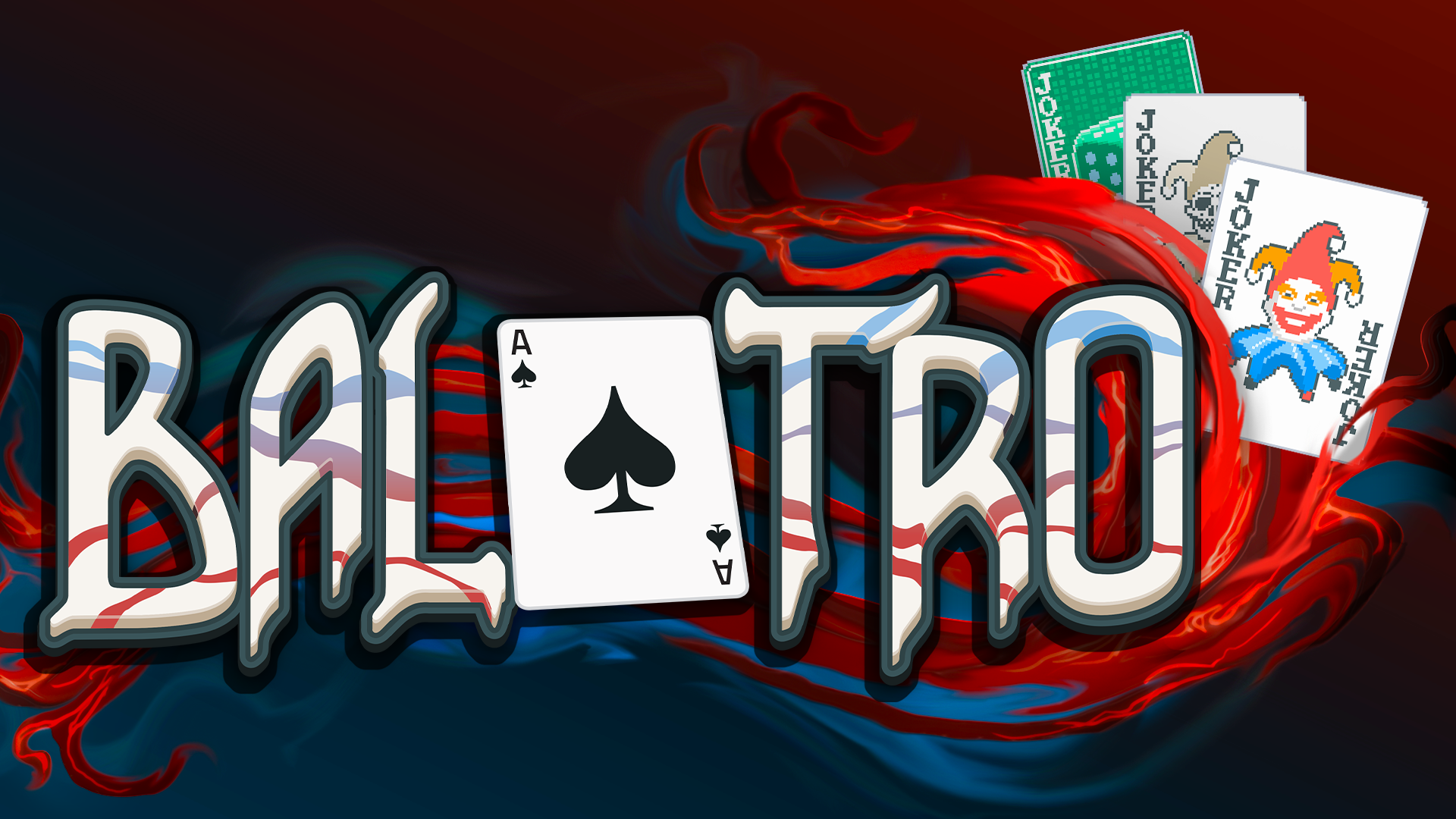
Balatro launched on February 20, 2024 as a poker roguelike. The description is accurate. The game uses poker hands: pairs, flushes, full houses, straights. It deals from a standard deck stocked with chips, blinds, antes and jokers. The whole visual surface looks like someone fed a casino machine through a CRT television and let the colors bleed. Two words put the game in front of millions of people. Both words describe the costume.
Balatro is not poker. Poker is adversarial and psychological, built around incomplete information, risk, tells, betting pressure and the person across the table deciding whether your confidence is real. Balatro has no opponents, no betting, no real-money mechanics, no bluffing, no table and no casino. The player reads a system instead of a person. The costume falls away inside the first run.
LocalThunk took the most culturally loaded deck of cards in the world and stripped out the social game everyone thinks they understand. Then the developer rebuilt the pieces into something closer to solitaire, math puzzle and roguelike buildcraft. The product was the feeling of watching a simple rule explode into a ridiculous combo because you understood the system one move earlier than it expected you to.
Liner Note Balatro released on February 20, 2024. Publisher Playstack describes it as 'The poker roguelike' and lists the core loop: play illegal poker hands, discover game-changing Jokers and build combos powerful enough to beat blinds. Source ↗ The phrase sold the game. It also created the problem.
The Costume
Balatro started as a side project LocalThunk made for friends, originally inspired by Big Two, the Cantonese card game where players build poker-like hands to shed cards. Then the developer saw the shape of roguelike deckbuilders spreading through Steam and watched Luck Be a Landlord turn a slot-machine premise into a single-player strategy loop. Every piece was borrowed from something. The design began when LocalThunk started taking pieces out.
The other players went first. The obvious version of a card-game project in 2021 was online multiplayer: build a table, add matchmaking, let friends play, ship a familiar social card experience with a slightly different ruleset. LocalThunk went the other direction. Balatro became single-player and the pressure moved from the opponent to the scoring threshold. The question stopped being “what does the other player have?” and became “what can this system become if the next shop gives me the right tool?”
Poker gave Balatro an instant vocabulary. Everyone understands a pair. Everyone understands a flush. A standard 52-card deck is one of the most durable interfaces ever designed: four suits, thirteen ranks, combinations that people can read without a tutorial. LocalThunk did not need to teach the atoms. The game could spend all of its energy teaching the mutations.
Jokers are the mutations. One Joker turns a weak hand into a multiplier, another rewards a specific suit and a third changes how face cards behave. Tarot cards modify the deck, Planet cards level up hand types and Vouchers shift the economy. Every run starts with an ancient object, the deck, then asks what happens when the rules become negotiable.
Balatro feels obvious after it exists because the design does not invent complexity. It reveals the unused product surface inside something everyone already knew. The deck is the onboarding system rather than the innovation. Poker hands are the shared language that lets the player enter without fear. The real object is rule literacy: learning how modifiers interact, when to commit to a build and when the system is quietly offering a better path.
Most product teams do this backwards. They start with the unfamiliar thing, then add a familiar metaphor during onboarding because users are confused. LocalThunk started with the familiar object and made the unfamiliar part the reward.
The player does not need to understand roguelike deckbuilding to click “Play.” They understand cards. Ten minutes later they are doing arithmetic in their head, rearranging probability, valuing a coupon economy and planning three shops ahead.
The Misread
Shortly after launch, Balatro’s European PEGI rating was changed to 18+ because of gambling imagery. The game was temporarily removed from sale in some territories. The world read the first surface and stopped there.
The rating board was not hallucinating. Balatro looks like gambling if you evaluate it by nouns: poker, chips, blinds, antes, hands, jokers. The game is full of casino language. The interface uses the cultural grammar of betting even though the mechanics remove the bet.
The same familiarity that makes onboarding effortless makes external interpretation dangerous. A playing card deck is not neutral. It carries history, regulation, moral panic, family-game nostalgia, casino association and digital age-rating policy. LocalThunk borrowed the interface because it was powerful. The power came with baggage. Liner Note After appeal, PEGI reclassified Balatro from 18+ to 12 in February 2025, noting that the game's fantasy elements distinguished it from real gambling. The issue was never that Balatro contained gambling. Its surface resembled gambling closely enough to trigger the classification system. Source ↗ The rating took a year to come back.
Products are judged by their surface before they are understood by their mechanics. Users, press, app stores, procurement, legal and executives all do the same first pass: one screenshot, one comparison set, one mental bucket. Poker was Balatro’s door. Many institutions treat the door as the house.
Most teams assume intent will be obvious because the team knows the system. It will not. The outside world reads affordances, labels, motion, color, comparisons and category memory first. It asks one question: what does this look like?
If your product looks like gambling, someone will evaluate it as gambling. If it looks like a dashboard, someone will judge it by dashboard expectations. If it looks like a chat app, users will expect chat-app behavior even if your backend is doing something more interesting.
The costume trains the audience before the product gets to explain itself.
The Line
Leaning into the gambling read would have been the easy business move. Balatro had the shape of a casino product without the ethical compromise. A less disciplined team could have looked at the attention, looked at the mechanics, looked at the addictive loop and started asking the worst possible product questions: paid packs, casino licensing, the version of the game everyone already thought they were looking at.
LocalThunk drew the line in the other direction. The developer publicly rejected the idea of Balatro becoming a gambling product and took legal steps to keep the IP away from casinos and gambling companies. Liner Note LocalThunk told PC Gamer that the thought of Balatro becoming a true gambling game was something they hated. They said they had made sure the IP could not be sold or licensed to any gambling company or casino. Source ↗ Using poker as the wrapper was the first creative decision. Refusing to let the wrapper define the product’s future was the second.
Balatro’s protected center is fair, sealed-system play: the run gives you tools, the tools interact, the numbers get weird and the machine only pays out because you learned how it thinks. Cards, poker, chips, blinds and the casino glow are paint on top of it. Real gambling would poison the center. It would turn math play into extraction, elegant uncertainty into house advantage and a toy about systems into a system about compulsion.
◆ Before you read on
What's the PM move here?
Think about the part of your product users see first. Is it teaching the right category, or just the easiest one?
You predicted:
Every product has a surface that can be monetized in ways that betray the thing underneath. Growth teams find the dark pattern that moves the number. Marketplaces find the quality compromise that increases liquidity. Social products find the engagement mechanic that makes the graph go up while making the room worse. The temptation always appears. Whether the product survives it depends on having a center worth protecting.
The Door and the House
Balatro works because the metaphor is loaded. A standard deck of cards carries hundreds of years of interaction design in your hand. The player knows it before the first screen loads. That inherited literacy is why the game can get strange so fast. Avoiding loaded metaphors costs more than it saves.
The surface is the first promise the product makes: the kind of attention users should bring, the comparison set reviewers should use, the rules platforms should apply and whether executives think they are looking at something familiar, risky, derivative or category-breaking. Balatro used poker as a bridge into systems thinking. The rating controversy proved that the same bridge could be mistaken for the destination. LocalThunk’s job, after the product worked, became protecting the distinction.
The surface can be a bridge. It can also be a trap.
Making sure the product’s outer layer teaches the right thing without surrendering the inner thing is the job. No backlog grooming, stakeholder management or alignment ritual covers it. No spreadsheet tells you whether the metaphor is carrying the product or consuming it.
Surface Area Discipline
Borrow the familiar for entry, not identity. Balatro uses poker to get the player through the door. It does not become poker. The familiar layer should lower activation cost without flattening the product into the old category.
Assume the outside read wins first. Intent is invisible. Surface is visible. If the product can be mistaken for something dangerous, cheap or generic, that read has to be designed against before launch, not explained away after.
Know which money is poison. The easiest monetization path is often the one the surface suggests. Balatro’s surface points toward gambling. The product’s center rejects it. That boundary is not brand positioning. It is product architecture.
By January 2025, Balatro had sold more than 5 million copies. It won major awards, hit mobile and became one of those rare games that seemed to infect every conversation around it. A solo developer made a product everyone could describe in two words, then spent the rest of the story proving those two words were incomplete.
◆ Your Take
What part of your product are outsiders mistaking for the product itself?
When you read this before, you wrote:
Your takeaway: